AWS VPC : Unlocking Secure Cloud Networking with AWS
Your Step-by-Step Guide to Building a Secure VPC in AWS

Share this article


Amazon Virtual Private Cloud (VPC) is a fundamental service in the AWS arsenal, offering a secure and isolated virtual network environment for your cloud resources. This blog dives deep into the world of VPCs, exploring the underlying technology, step-by-step setup guide, and the compelling reasons to leverage it for your cloud deployments.
Why Move Away from Public IPs and Embrace VPCs?
While assigning a public IP address to an EC2 instance might seem convenient, it's often not the most secure or efficient approach. Here's why a VPC with private subnets is the preferred option:
Security Enhancement: Public IPs expose your instances directly to the internet, making them vulnerable to unauthorized access attempts. VPCs create a secure isolation layer, shielding your instances from the public internet and limiting access based on your security group rules. This significantly reduces the attack surface and strengthens your overall security posture.
Granular Control: With public IPs, you have limited control over inbound and outbound traffic. VPCs empower you to define granular security group rules, precisely controlling which ports and protocols can be accessed by your instances. This allows you to implement a principle of least privilege, minimizing potential security risks.
Cost Optimization: Public IP addresses can incur additional charges compared to private IP addresses within a VPC. By leveraging a NAT gateway for outbound internet access, you can optimize costs while maintaining secure communication.
Improved Network Management: Managing a collection of public IP addresses can become cumbersome and error-prone. VPCs provide a centralized and organized network environment, simplifying instance management and network configuration.
Scalability and Flexibility: When your infrastructure scales, managing a growing number of public IP addresses becomes complex. VPCs offer a more scalable solution. You can easily add subnets and resources within your VPC to accommodate growth, while maintaining a well-defined network structure.
By leveraging private subnets and security groups, you gain a greater degree of control over your network environment and bolster the security of your cloud resources.
Understanding the VPC: Building Blocks
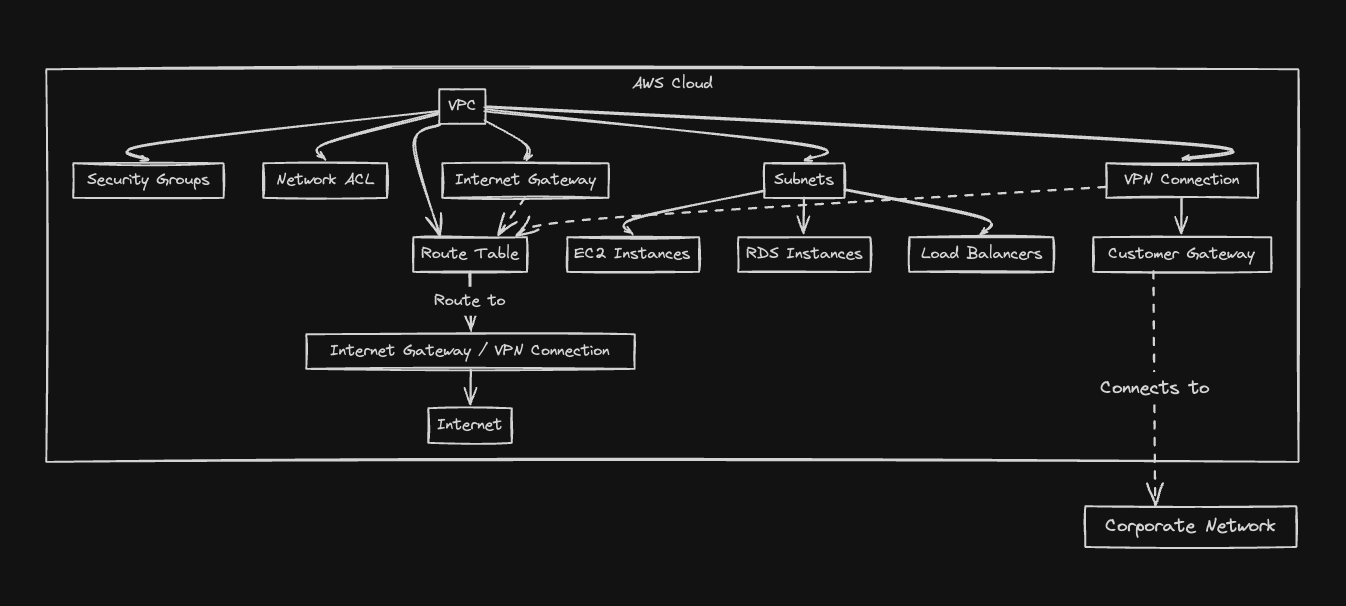
At its core, a VPC functions like a virtual data center within the vast AWS cloud. It provides a logically isolated network segment where you can launch your resources like EC2 instances, databases, and more. This isolation strengthens security as your VPC resources are separated from other AWS accounts and virtual networks.